
In Uganda’s criminal justice system, it’s the mandate of the Office of the Director of Public Prosecutions to sustain criminal proceedings against anyone accused of any crime.
Although individuals can also institute criminal proceedings privately, these proceedings must be taken over by the ODPP in due course.
The DPP equally has the mandate to discontinue any criminal proceeding instituted by him/herself through a ‘Nolle Prosequi’, at any stage before the court’s final judgment. (Article 120 of the 1995 Constitution)
The DPP uses it to withdraw charges where there is no sufficient evidence against the accused persons. People are often prosecuted frivolously, without sufficient evidence to convict them.
The complainants work with Police to hoodwink the DPP into commencing proceedings believing the accused has a case to answer, hence condemning the accused to long periods of remand without trial.
As such, the DPP may withdraw such charges for failure of evidence. In February 2022, the then DPP, Hon Jane Francis Abodo withdrew murder charges against one Alex Twinomugisha who had been on remand for 22 years without trial.
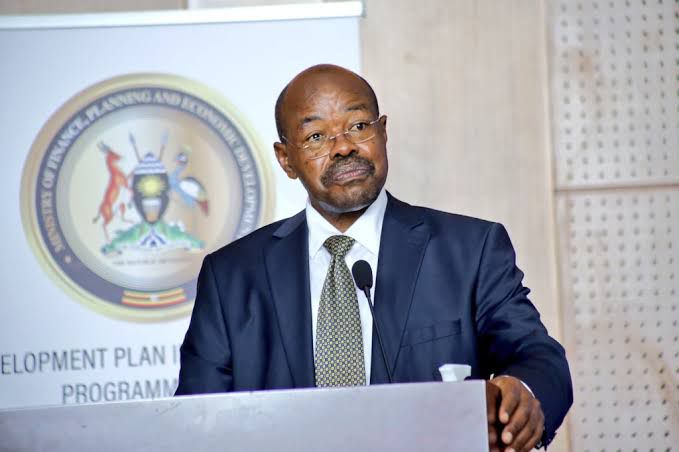
Yesterday, 11th November 2025, the Anti-Corruption Division of the High Court set the State minister for Finance and Planning Amos Lugolobi free after the DPP dropped all charges against him.
Similarly, the DPP has today dropped all charges against the former MUBS Principal Prof. Wasswa Balunywa who was charged on 3 counts of abuse of office and 3 counts of neglect of duty under the Anti Corruption and Penal Code Acts respectively.
These developments have been met with mixed reactions from the public as most question the spirit in which these charges have been dropped, especially given that it has come at a time of transition in the DPP’s office as Lady Justice Jane Frances Abodo who has been appointed Principal Judge makes way for new leadership under Lino Anguzu who formerly headed the International crimes Department at the Office of the DPP.
Therefore, the DPP has an expansive and uninhibited locus of mandate in discontinuing charges, leaving courts with little or no room to influence the process (except in proceedings not commenced by the ODPP).
The DPP is hence technically at liberty to withdraw charges even where there is evidence to suffice a conviction, and courts have no power to say NO.
